
 Save
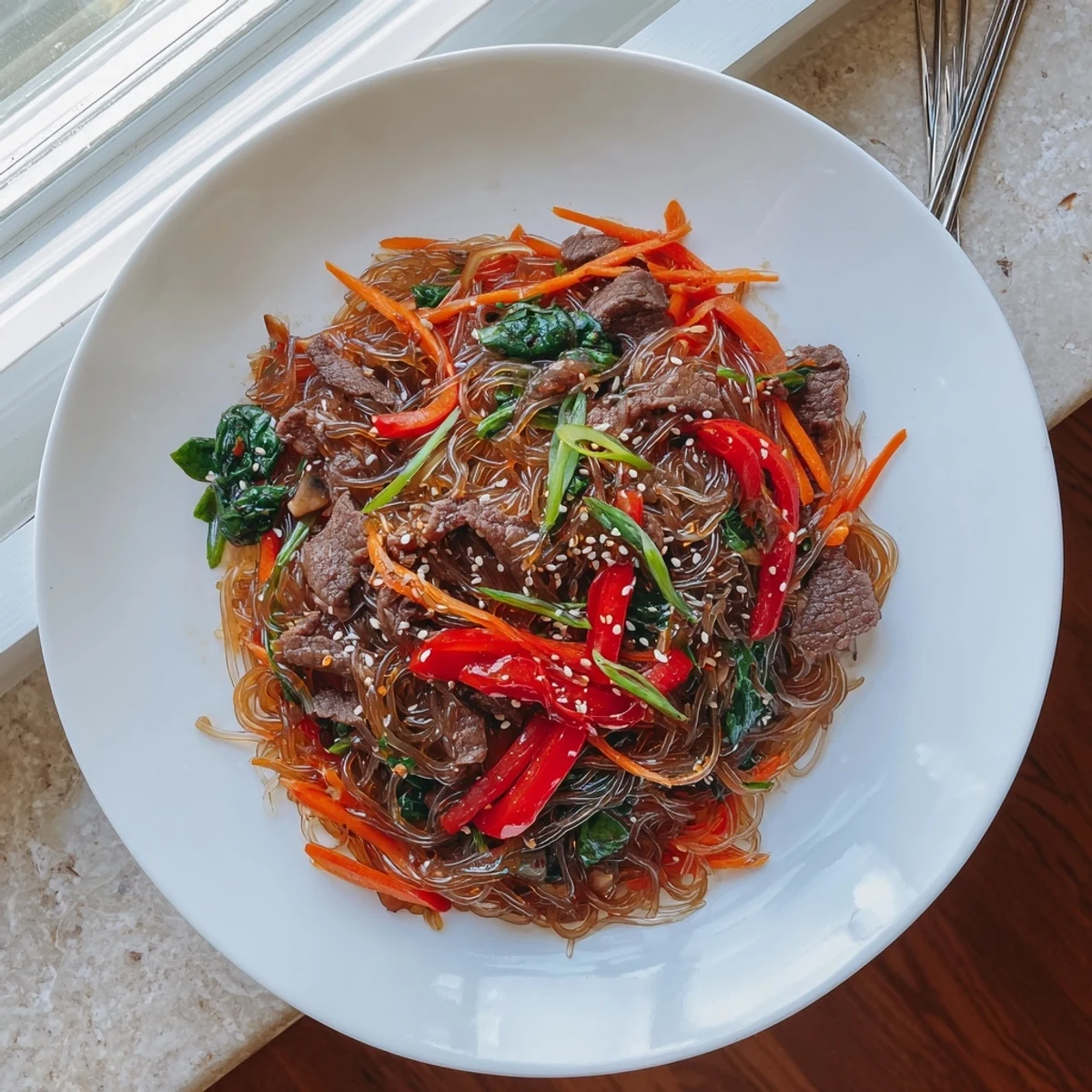
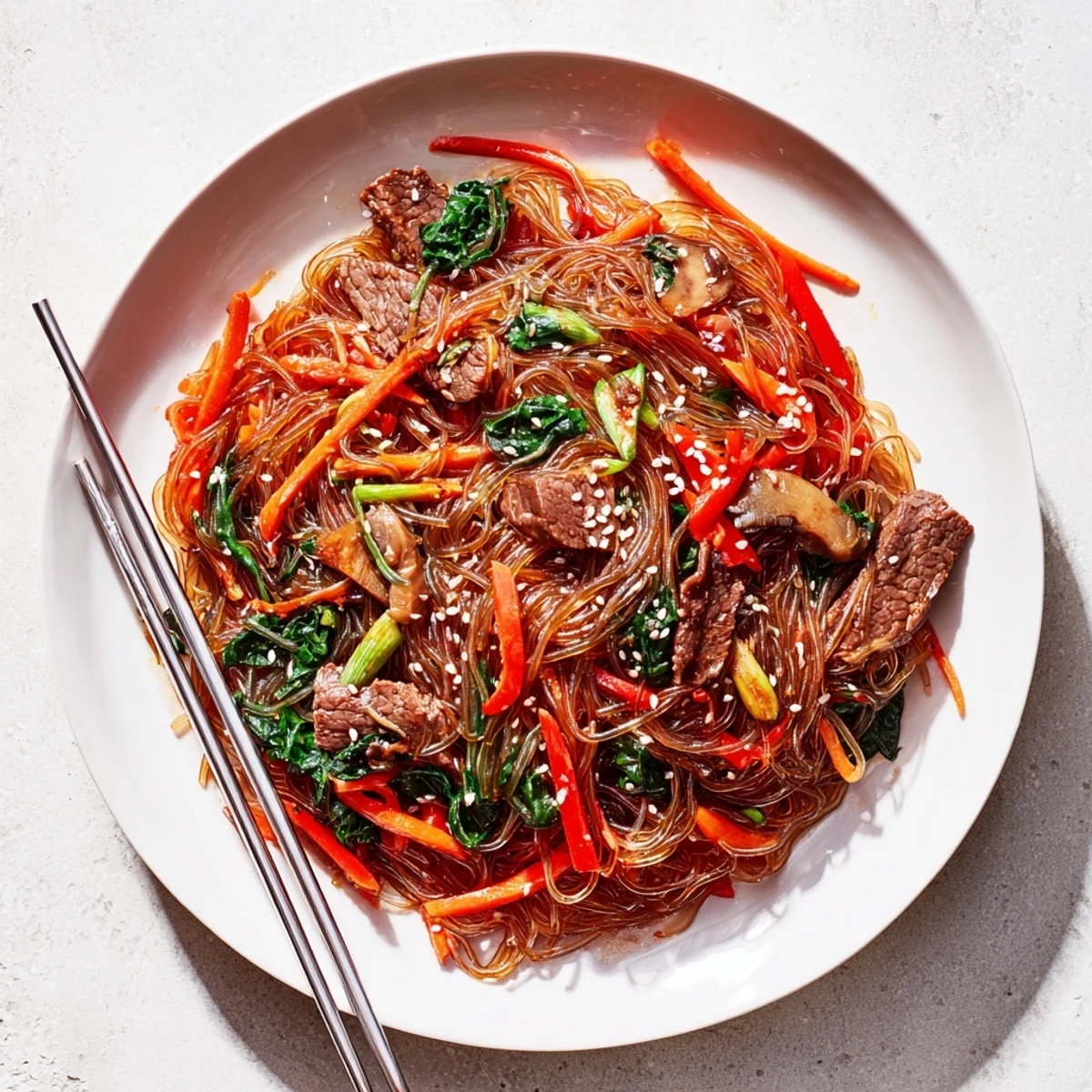
Save This Korean-inspired noodle dish features tender slices of beef marinated and stir-fried to perfection. The sweet potato glass noodles provide a delightfully chewy texture that pairs beautifully with crisp vegetables like carrots, bell peppers, and mushrooms. A rich sauce blending soy sauce, gochujang, brown sugar, and aromatic ginger creates the perfect balance of savory, sweet, and mildly spicy flavors. Ready in just 45 minutes, this satisfying meal serves four and works wonderfully for weeknight dinners when you want something comforting yet special.
The first time I made Korean beef noodles, my apartment smelled like sesame and garlic for days afterward. My roommate kept wandering into the kitchen, asking when dinner would be ready. That was the moment I realized this dish has a way of pulling people toward the stove.
I once made this for a friend who claimed she hated spicy food. She tentatively took one bite, then proceeded to eat three bowls while asking if I could make it every week. The gochujang adds just enough warmth without overwhelming someone who is spice-sensitive.
Ingredients
- Flank steak or sirloin: Thinly slicing against the grain makes all the difference between tough and tender beef
- Sweet potato glass noodles: These chewy noodles soak up the sauce beautifully and have the perfect springy texture
- Gochujang: This Korean chili paste brings a fermented depth that you cannot replicate with regular hot sauce
- Sesame oil: A little goes a long way, adding that unmistakable nutty aroma
- Brown sugar: The molasses notes help caramelize everything and balance the salty soy sauce
- Fresh vegetables: The crunch of carrots and peppers contrasts perfectly with the soft noodles
Instructions
- Marinate the beef:
- Toss the sliced beef with soy sauce, cornstarch, and sesame oil until each piece is coated. Let it sit while you chop everything else, which helps tenderize the meat.
- Cook the noodles:
- Boil the noodles according to package directions, then rinse immediately under cold water to stop the cooking and keep them from sticking together.
- Make the sauce:
- Whisk together the soy sauce, brown sugar, gochujang, mirin, sesame oil, garlic, ginger, and water until the sugar dissolves completely.
- Sear the beef:
- Heat oil in a hot skillet and cook the beef in batches, letting each piece develop a nice sear before flipping. Overcrowding the pan will steam the meat instead of searing it.
- Cook the vegetables:
- Add fresh oil to the pan and stir-fry the carrots, peppers, and mushrooms until they are tender-crisp. The kitchen will start smelling amazing right about now.
- Bring it all together:
- Return the beef to the pan, then add the noodles, spinach, and sauce. Toss everything with tongs for a few minutes until the spinach wilts and the sauce coats every strand of noodle.
- Finish with garnish:
- Serve immediately while the noodles are still steaming hot, topped with toasted sesame seeds and fresh scallions for that final pop of color.
 Save
Save This recipe became my go-to after my grandmother mentioned she had trouble finding takeout that was not too greasy. Now she asks for it every time I visit, and I have caught my dad sneaking leftovers straight from the refrigerator at midnight.
Perfecting the Noodles
If you cannot find sweet potato glass noodles, rice noodles work in a pinch, though they will not have quite the same chew. Just remember that different brands cook differently, so taste them a minute before the package recommends.
Adjusting the Heat
Gochujang varies by brand, so start with less and add more at the end if you want more spice. The paste also mellows slightly as it cooks, so what seems spicy right after mixing will be more balanced once everything comes together.
Make-Ahead Tips
You can slice the beef and chop all the vegetables up to a day in advance, storing everything separately in the refrigerator. The sauce can also be whisked together and kept in a jar, which makes the actual cooking time about fifteen minutes on a busy weeknight.
- Cook the noodles just before serving because they do not reheat well
- Double the sauce recipe and keep half in the freezer for next time
- Prep all your ingredients before turning on the stove, because stir-frying happens fast
 Save
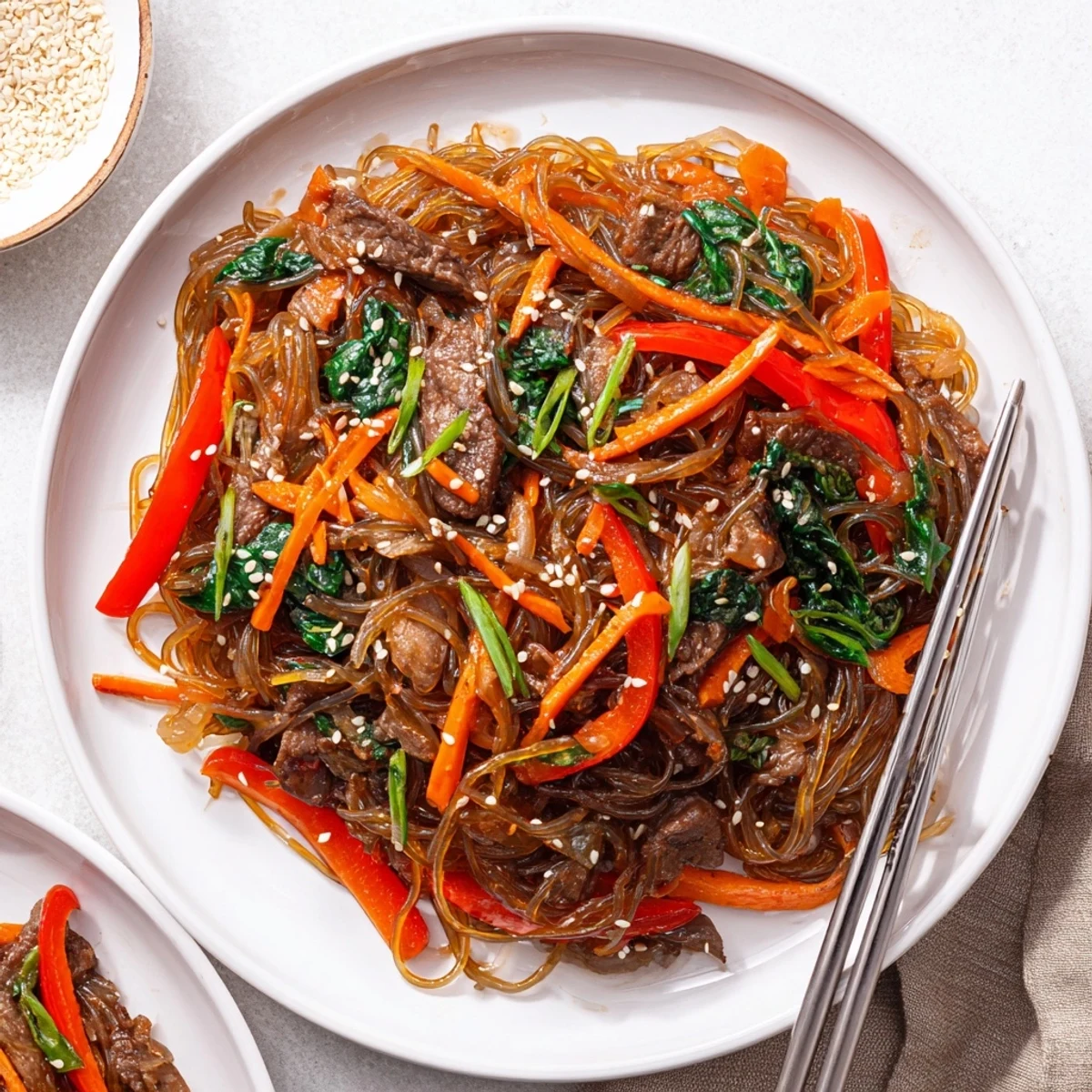
Save There is something deeply satisfying about digging into a bowl of these noodles, steam rising and sauce coating every ingredient. I hope this recipe finds its way into your regular rotation.
Recipe FAQs
- → What type of noodles work best for this dish?
-
Korean sweet potato glass noodles (dangmyeon) are traditional and provide a delightfully chewy texture. Rice noodles make an excellent gluten-free alternative that still works well with the bold flavors.
- → Can I make this dish less spicy?
-
Absolutely. Reduce the amount of gochujang in the sauce or omit it entirely for a milder version. The dish still delivers wonderful flavor through the soy sauce, garlic, ginger, and sesame oil.
- → What cut of beef is ideal?
-
Flank steak or sirloin work beautifully when thinly sliced against the grain. This ensures tender bites that cook quickly in the hot skillet while remaining juicy and flavorful.
- → How do I store leftovers?
-
Store in an airtight container in the refrigerator for up to 3 days. Reheat gently in a skillet with a splash of water, adding fresh vegetables if desired to restore texture.
- → Can I prepare this ahead of time?
-
You can slice the beef, prepare the sauce, and chop vegetables up to a day in advance. Cook everything just before serving for the best texture and flavor.