
 Save
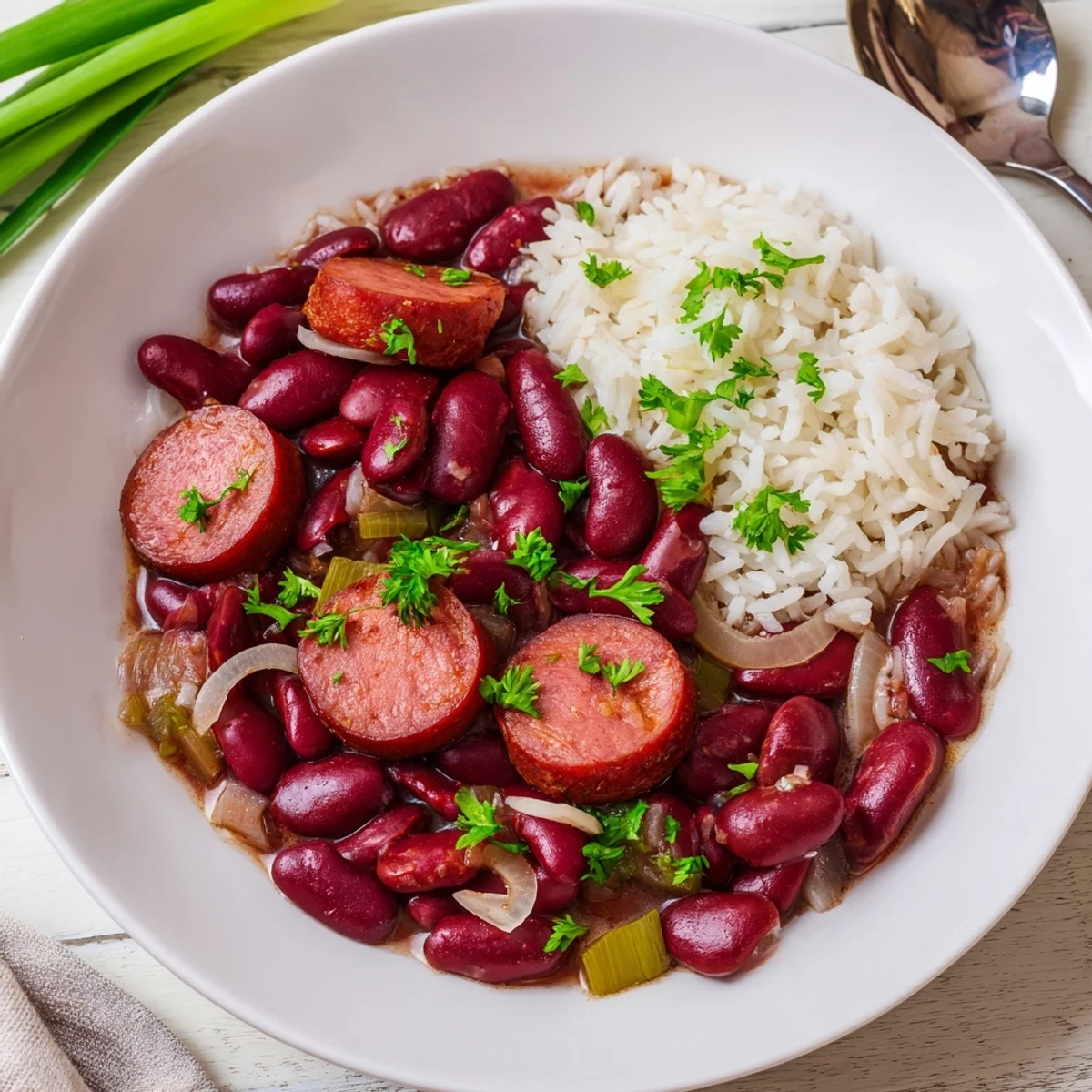
Save This Southern staple begins with soaked red kidney beans and browned smoked sausage. Sauté onion, bell pepper and celery until softened, then add garlic, thyme, smoked paprika and broth and simmer for about an hour until beans are tender. Return sausage, mash some beans to thicken, and simmer briefly. Serve hot over fluffy rice with parsley and scallions; offer hot sauce alongside.
The rain was hammering against the kitchen window the afternoon I decided red beans and rice was the only reasonable answer to a grey Monday. I had soaked the beans the night before, mostly out of stubbornness, because my grandmother always said patience with dried beans is what separates a good cook from a hungry one. The smell of andouille hitting hot olive oil changed the entire mood of the house within minutes. Even the dog came wandering in, hopeful and Opinionated.
My friend Marcus came over once while I was making this and stood over the pot with a wooden spoon, mashing beans against the side like he had been doing it his whole life. He grew up in Lafayette and told me his mother never measured anything, just tasted and adjusted until it was right. That conversation changed how I cook this dish forever, honestly.
Ingredients
- 300 g smoked sausage, preferably Andouille, sliced: The smoky, spicy fat renders into the beans and becomes the backbone of the entire dish, so choose a sausage you would eat on its own.
- 450 g dried red kidney beans, soaked overnight and drained: Canned beans will never give you the same creamy texture that slow cooking dried beans provides, and the soaking is nonnegotiable.
- 1 large onion, finely chopped: Onion is part of the holy trinity of Cajun cooking and builds the aromatic foundation everything else stands on.
- 1 bell pepper, chopped: Green is traditional but I often use red or orange for a slight sweetness that balances the smoke.
- 2 celery stalks, chopped: Celery adds a quiet earthiness that you would absolutely miss if it were not there.
- 4 garlic cloves, minced: Four is a minimum in my kitchen, and I have never regretted adding a fifth.
- 2 bay leaves: They work quietly in the background and you only notice their contribution when you forget them.
- 1 teaspoon dried thyme: Thyme brings a woodsy, herbal note that ties the smoky and earthy elements together.
- 1 teaspoon smoked paprika: This deepens the smokiness beyond what the sausage alone can do, especially important if your sausage is mild.
- 1/2 teaspoon cayenne pepper, optional: Add this if you want a gentle heat that builds with each bite rather than overwhelming you up front.
- 1.2 liters chicken or vegetable broth: Homemade broth makes a noticeable difference here since the beans absorb so much of the liquid.
- Salt and black pepper to taste: Season gradually and taste often, because the sausage and broth already contribute significant salt.
- 2 tablespoons olive oil: Just enough to get the sausage browning and the vegetables sweating without sticking.
- 2 tablespoons chopped fresh parsley: A bright, fresh finish that cuts through the richness right at the end.
- 360 g long-grain white rice, cooked: Fluffy rice is the bed that makes this a complete meal rather than just a bowl of beans.
- 2 spring onions, sliced, optional: A sharp, fresh bite on top that I have started considering nonnegotiable.
Instructions
- Get the sausage golden:
- Heat the olive oil in a large Dutch oven over medium heat and lay the sausage slices in without crowding the pan. Let them sit undisturbed for a few minutes until the undersides develop a deep brown crust, then flip and cook another few minutes until beautifully caramelized all over. Remove them to a plate but leave every bit of rendered fat behind.
- Build the trinity:
- Toss the onion, bell pepper, and celery into that same pot with all those flavorful drippings and stir until the vegetables soften and the onion turns translucent. You will smell the shift immediately, sweet and savory at once. Add the garlic and stir for about a minute until fragrant but not browned.
- Bring it all together:
- Pour in the soaked beans, bay leaves, thyme, paprika, and cayenne if you are using it, then add the broth and stir to combine everything. Bring it to a full boil and you will see the foam rise, which is perfectly normal. This is where the slow transformation begins.
- Let patience do the work:
- Reduce the heat to low, cover the pot, and let everything simmer gently for about an hour, stirring every so often so nothing sticks to the bottom. The beans should be just tender when you bite into one but not falling apart yet. This waiting is the hardest and most important part.
- Thicken and finish:
- Return the browned sausage to the pot and simmer uncovered for another 20 to 30 minutes, using the back of your spoon to mash some beans against the side of the pot. This is where the broth transforms into something rich and saucy. Season generously with salt and pepper, tasting as you go.
- Serve it up:
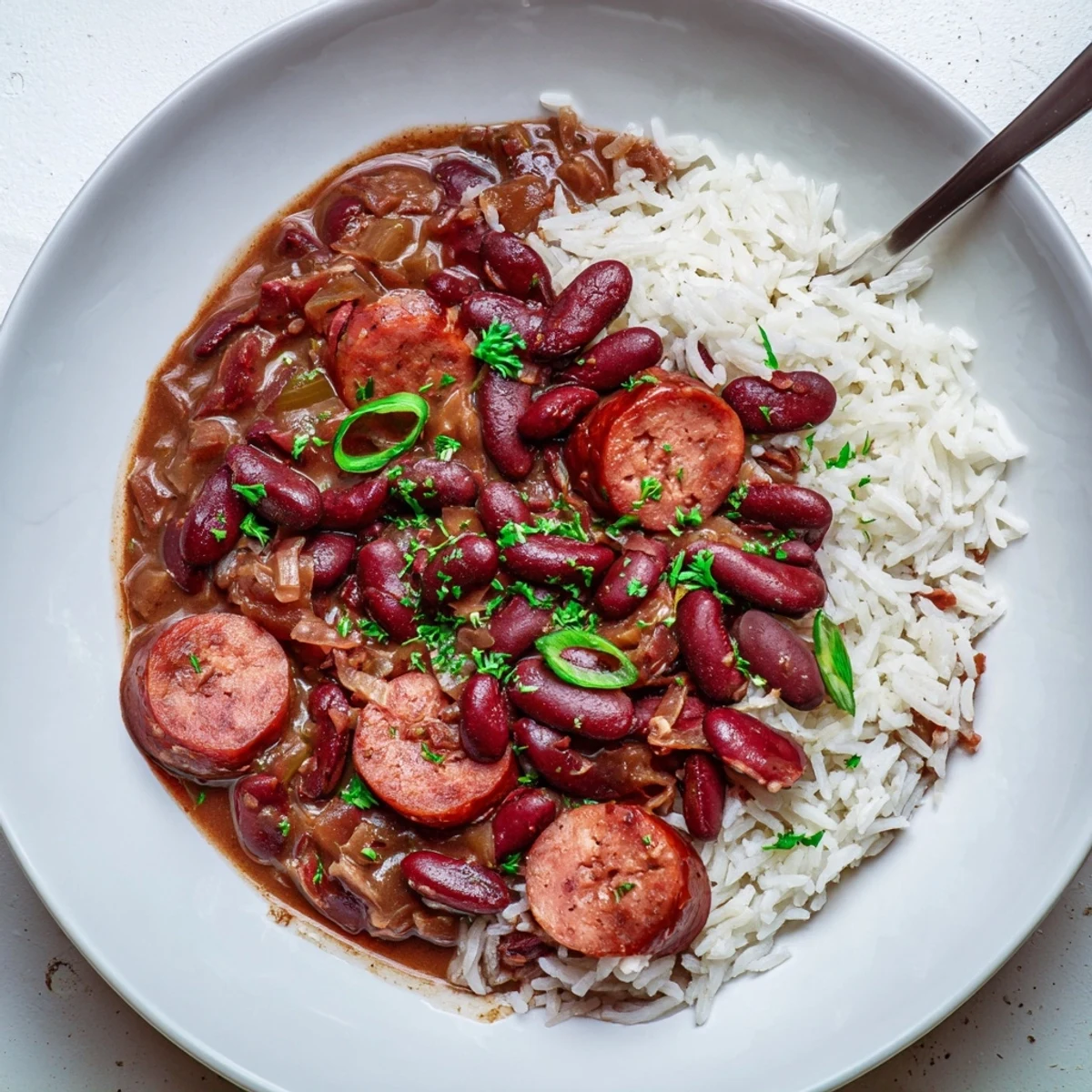
- Remove and discard the bay leaves, then ladle the hot beans and sausage over fluffy white rice. Scatter parsley and spring onions on top and serve with hot sauce nearby for anyone who wants to push the heat further.
 Save
Save I once made a double batch of this for a neighborhood potluck and watched a man who said he hated beans go back for thirds. He asked me what my trick was and I told him honestly it was just time and an extra clove of garlic. Some dishes do not need tricks, they just need you to show up and pay attention.
Serving Thoughts
A cold lager or a glass of something white and crisp sitting next to this bowl is all you really need to complete the picture. The slight bitterness of the beer or the acidity of the wine cuts through the richness in a way that keeps you comfortable going back for more.
Making It Your Own
If you want to go vegetarian, skip the sausage entirely and double down on smoked paprika, maybe add a tablespoon of soy sauce for umami depth. The beans carry the dish beautifully on their own when treated with the same patience and care.
Storing and Reheating
This is one of those rare dishes that genuinely improves overnight as the beans continue to absorb seasoning and the flavors meld into something deeper and more unified. Store it in the fridge for up to four days and reheat gently on the stove with a splash of broth.
- Freeze individual portions in airtight containers for up to three months for an easy weeknight rescue.
- Always store rice separately so it does not turn gummy and unappetizing.
- Remember to label the containers because everything looks the same frozen and your future self will thank you.
 Save
Save Red beans and rice is not trying to impress anyone, and that is exactly why it does. Make it once and it will quietly become part of your regular rotation without asking permission.
Recipe FAQs
- → How long should I soak the dried red beans?
-
Soak overnight in plenty of water to reduce cooking time and improve texture. For a quick soak, bring beans to a boil for 2 minutes, remove from heat and let stand, covered, for 1 hour, then drain and rinse before using.
- → Can I use canned beans instead of dried?
-
Yes. Reduce simmering time: add canned, drained beans after the aromatics and simmer 15–20 minutes to let flavors meld. Skip the long soak and adjust seasoning and liquid since canned beans carry more salt.
- → How do I thicken the bean mixture without extra starch?
-
Mash a portion of the cooked beans against the pot side to release starch and naturally thicken the liquid. You can also simmer uncovered to reduce liquid and concentrate the mixture for a creamier finish.
- → What are good sausage substitutes or vegetarian options?
-
Swap andouille for smoked kielbasa or chorizo for a different smoky note. For a vegetarian approach, omit sausage, use rich vegetable broth, add smoked paprika and a splash of liquid smoke, and consider mushrooms or smoked tempeh for depth.
- → Any tips for perfectly cooked rice to serve with the beans?
-
Use long-grain rice with a 2:1 water-to-rice ratio, bring to a gentle simmer, cover and cook undisturbed until water is absorbed. Fluff with a fork and keep warm under a lid until serving to maintain light, separate grains.
- → How should leftovers be stored and reheated?
-
Cool quickly and refrigerate in an airtight container for 3–4 days. Reheat gently on the stove with a splash of broth to loosen the texture, stirring frequently, or microwave in short bursts until heated through.