
 Save
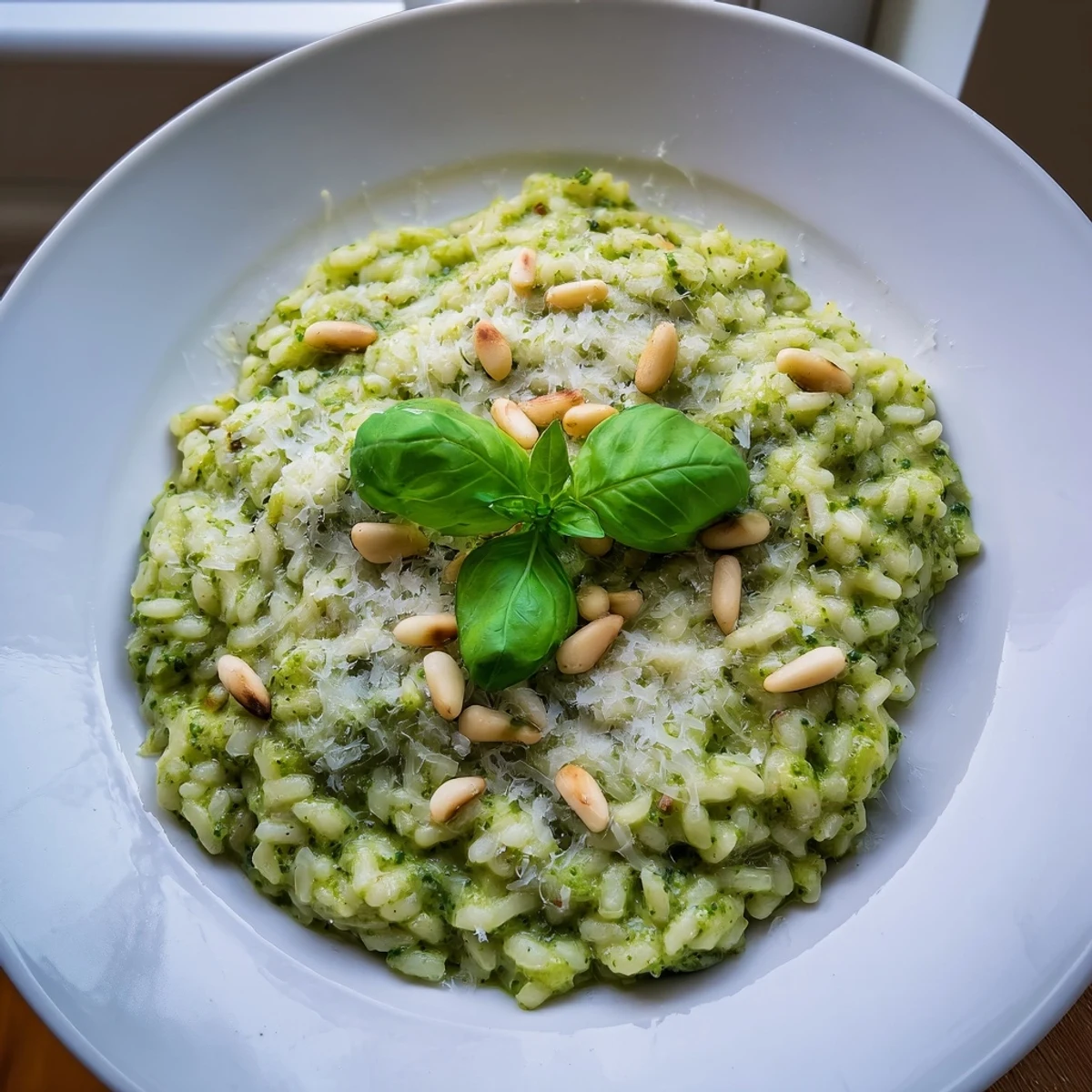
Save This beloved Italian classic transforms Arborio rice through slow simmering, creating that signature velvety texture. Fresh basil pesto imparts vibrant herbaceous notes while aged Parmesan adds umami depth. The gradual broth absorption technique—ladling hot liquid one portion at a time—develops the rice's natural starches for that irresistibly creamy consistency without heavy cream.
Perfect for weeknight dinners or entertaining, this dish comes together in under an hour. The vegetarian-friendly profile makes it adaptable for various preferences, while the technique remains authentic to Northern Italian traditions. Serve as a standalone centerpiece or alongside grilled vegetables and crusty bread.
The first time I made pesto risotto, my kitchen filled with such an incredible aroma that my roommate abandoned her study session to investigate. She stood beside me, watching the slow transformation of rice grains into something luxuriously creamy, and we ended up eating straight from the pan while leaning against the counter. Now every time I make it, I'm transported back to that impromptu dinner and the way something so simple could feel like such a celebration.
I served this at a small dinner gathering last spring when my friend announced she was moving across the country. Between the clinking of wine glasses and the conversation about new beginnings, this risotto became the centerpiece of a night that felt both melancholy and hopeful. She still messages me whenever she makes it, claiming it's the taste of home she can recreate anywhere.
Ingredients
- Arborio rice: This short-grain rice is essential because its high starch content creates that signature creamy texture while maintaining a pleasant bite at the center
- Low-sodium vegetable broth: Keeping the broth on the lower end of salt allows you to control the seasoning precisely since Parmesan already brings significant saltiness
- Unsalted butter and olive oil: The combination gives you the rich flavor of butter while preventing it from burning over the medium heat needed for proper rice toasting
- Yellow onion: Finely diced onion melts into the rice foundation, providing a subtle sweetness that balances the bright basil notes
- Garlic: Minced fresh garlic adds aromatic depth that complements but never competes with the pesto flavors
- Dry white wine: The acid cuts through the richness and adds complexity, plus watching it bubble away and absorb into the rice is one of the most satisfying moments in the process
- Freshly grated Parmesan cheese: Pre-grated cheese has anti-caking agents that prevent smooth melting, so always grate your own for the silkiest texture
- Basil pesto: Whether homemade or store-bought, look for a pesto with bright green color and no preservatives for the freshest flavor
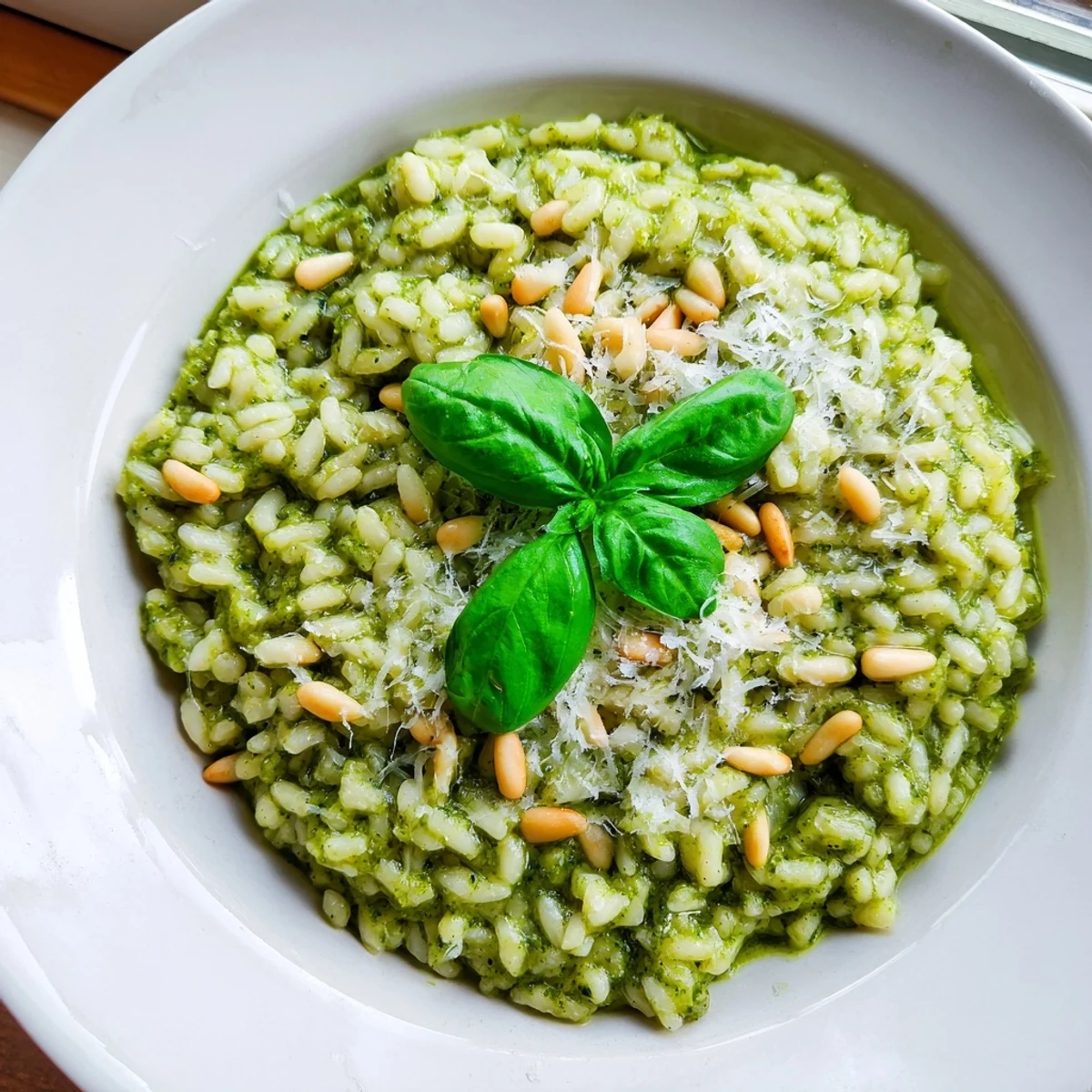
- Fresh basil leaves and toasted pine nuts: These garnishes add visual appeal and contrasting textures that make each forkful more interesting
Instructions
- Build your flavor foundation:
- Melt the butter and olive oil in your large heavy-bottomed saucepan over medium heat until the butter foams slightly, then add the diced onion and sauté until it becomes completely translucent and soft, about 3 minutes, before stirring in the minced garlic and letting it cook for just 1 minute until fragrant but not browned
- Toast the rice:
- Add the Arborio rice to the pan and cook, stirring constantly to coat every grain in the fat mixture, for about 2 minutes until you see the grains become slightly translucent around the edges and they give off a subtly nutty aroma
- Deglaze with wine:
- Pour in the white wine all at once and stir continuously as it bubbles vigorously, cooking until the liquid has almost completely absorbed and the raw alcohol smell has cooked off, leaving behind just a subtle acidity
- Begin the gradual broth addition:
- Add the warm vegetable broth one ladle at a time, stirring frequently and allowing each addition to be almost completely absorbed before adding the next, maintaining a gentle simmer throughout the process
- Continue cooking to perfection:
- Keep adding broth and stirring for about 18 to 20 minutes total until the rice is creamy and tender but still retains a slight bite at the very center, knowing you may not need all 5 cups of broth depending on how quickly the rice cooks
- Finish with pesto and cheese:
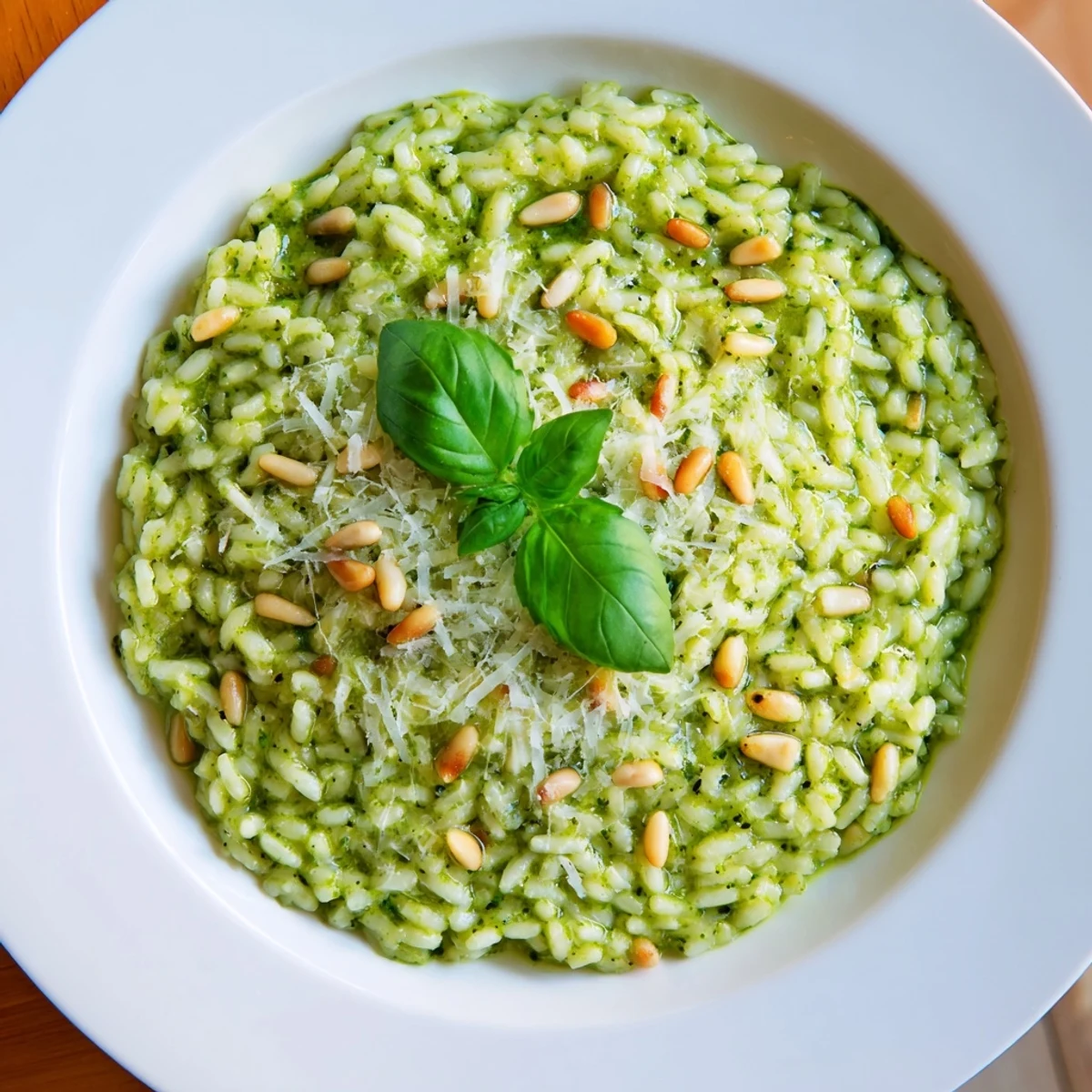
- Reduce the heat to low and stir in the Parmesan cheese and pesto until the rice turns a vibrant green and the cheese has melted into a smooth, glossy sauce, then season with salt and pepper to taste
- Let it rest briefly:
- Remove the pan from the heat, cover it, and let the risotto rest for 2 minutes, which allows the flavors to meld and the texture to become even more velvety before serving
 Save
Save This recipe saved me during a particularly stressful week when I was working late and needed something that felt nurturing but didn't require hours of attention. The rhythmic stirring became almost therapeutic, and by the time I sat down with my bowl, the day's tension had dissolved into something much more manageable.
Making It Your Own
While this basic recipe is delicious on its own, I've found that adding a handful of fresh spinach in the last few minutes of cooking adds both nutrition and a beautiful depth of color. Sometimes I'll fold in some sun-dried tomatoes for a sweet and tangy contrast that pairs wonderfully with the basil.
Wine Pairing Wisdom
A crisp Pinot Grigio or Sauvignon Blanc mirrors the wine used in the risotto while cutting through the richness. I've also discovered that a light Pinot Grigio brings out the herbal notes in the pesto beautifully without overpowering the delicate flavors.
Storage and Reheating
Risotto is best enjoyed immediately but can be stored in an airtight container in the refrigerator for up to 2 days. When reheating, add a splash of broth or water and warm it gently over low heat, stirring frequently to restore that creamy texture.
- For a fun twist, chill leftover risotto overnight, form into patties, and pan-fry for crispy risotto cakes
- If you know you're making extra, slightly undercook the rice so it maintains better texture when reheated
- Never freeze risotto as the texture becomes grainy and unpleasant when thawed
 Save
Save There's something deeply satisfying about a dish that asks for your presence and attention, rewarding you with comfort in return. I hope this risotto becomes a go-to for your own moments worth celebrating.
Recipe FAQs
- → What makes risotto creamy without cream?
-
The creamy texture comes from Arborio rice's high starch content. As you stir and gradually add warm broth, the rice releases starch naturally, creating that luxurious velvety consistency without any dairy additions.
- → Can I make this gluten-free?
-
Absolutely. Arborio rice is naturally gluten-free, and most pesto brands are too. Just verify your pesto doesn't contain wheat-based thickeners, and use gluten-free broth.
- → Why must the broth be warm?
-
Adding cold broth shocks the rice, interrupting the cooking process and resulting in uneven texture. Warm broth maintains consistent temperature, allowing gradual starch release for perfectly al dente grains.
- → How do I store leftovers?
-
Refrigerate in an airtight container within two hours of cooking. It keeps 3-4 days. Reheat gently with a splash of broth, stirring frequently to restore creaminess.
- → Can I use different rice varieties?
-
Arborio's high starch content is essential. Carnaroli or Vialone Nano work well, but long-grain rices won't achieve that signature creamy texture. Stick with short-grain Italian varieties.