
 Save
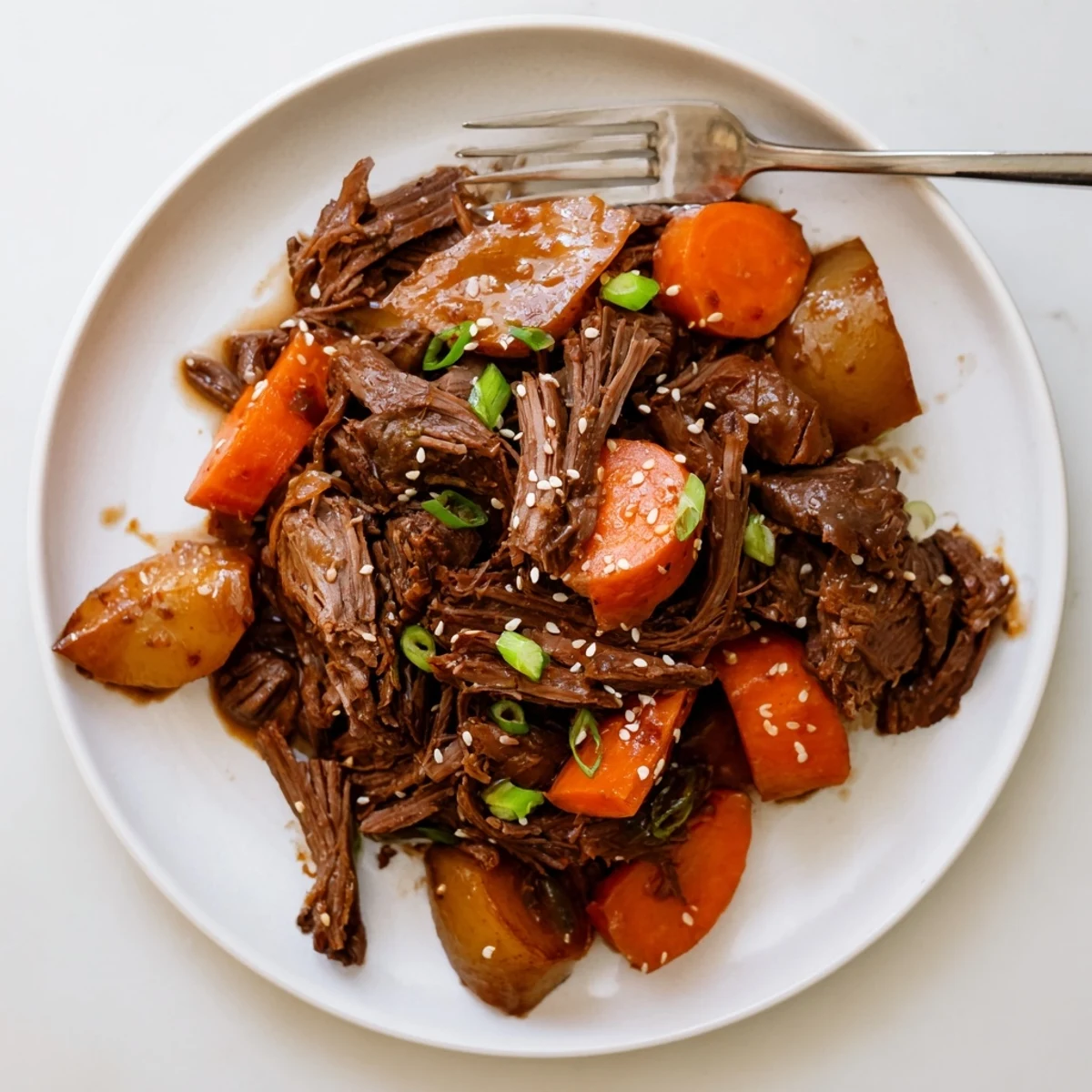
Save This comforting pot roast transforms beef chuck into meltingly tender meat through slow braising in a rich Korean-style sauce. The savory-sweet glaze combines soy sauce, gochujang chili paste, ginger, garlic, and sesame oil for authentic depth of flavor. Root vegetables like carrots and daikon radish absorb the aromatic broth while the beef becomes fork-tender after three hours in the oven.
The first time I made this Korean-inspired pot roast, my apartment smelled like the best Korean restaurant in town. My neighbor actually knocked on my door to ask what I was cooking. That evening turned into an impromptu dinner party with people grabbing forks and eating straight from the Dutch oven.
Last winter, I made this roast for a family dinner that had everyone reaching for seconds. My father-in-law, whos usually skeptical about anything spicy, went back for thirds. He kept asking what the secret ingredient was, and I just smiled and said ginger and patience.
Ingredients
- Beef chuck roast: Chuck roast has the perfect marbling for slow cooking, becoming meltingly tender while staying juicy
- Gochujang: This Korean chili paste adds a deep fermented heat that builds slowly rather than hitting all at once
- Fresh ginger: Grating fresh ginger instead of using powder makes a huge difference in the bright, spicy kick
- Sesame oil: Toasted sesame oil adds that unmistakable nutty aroma that makes the kitchen smell amazing
- Daikon radish: The radish soaks up the savory sauce and becomes incredibly tender, almost like a potato but lighter
Instructions
- Season and Sear the Beef:
- Pat the roast completely dry with paper towels, then season generously with salt and pepper. Heat your Dutch oven over medium-high heat until its smoking slightly, then sear every surface until deeply golden brown.
- Build the Flavor Base:
- Sauté the onions in the same pot until softened, then whisk together all the sauce ingredients until the sugar and honey dissolve completely.
- Slow Cook to Perfection:
- Nestle the beef back into the pot, arrange the vegetables around it, and pour that gorgeous sauce over everything. Cover tightly and let the oven work its magic for three hours.
 Save
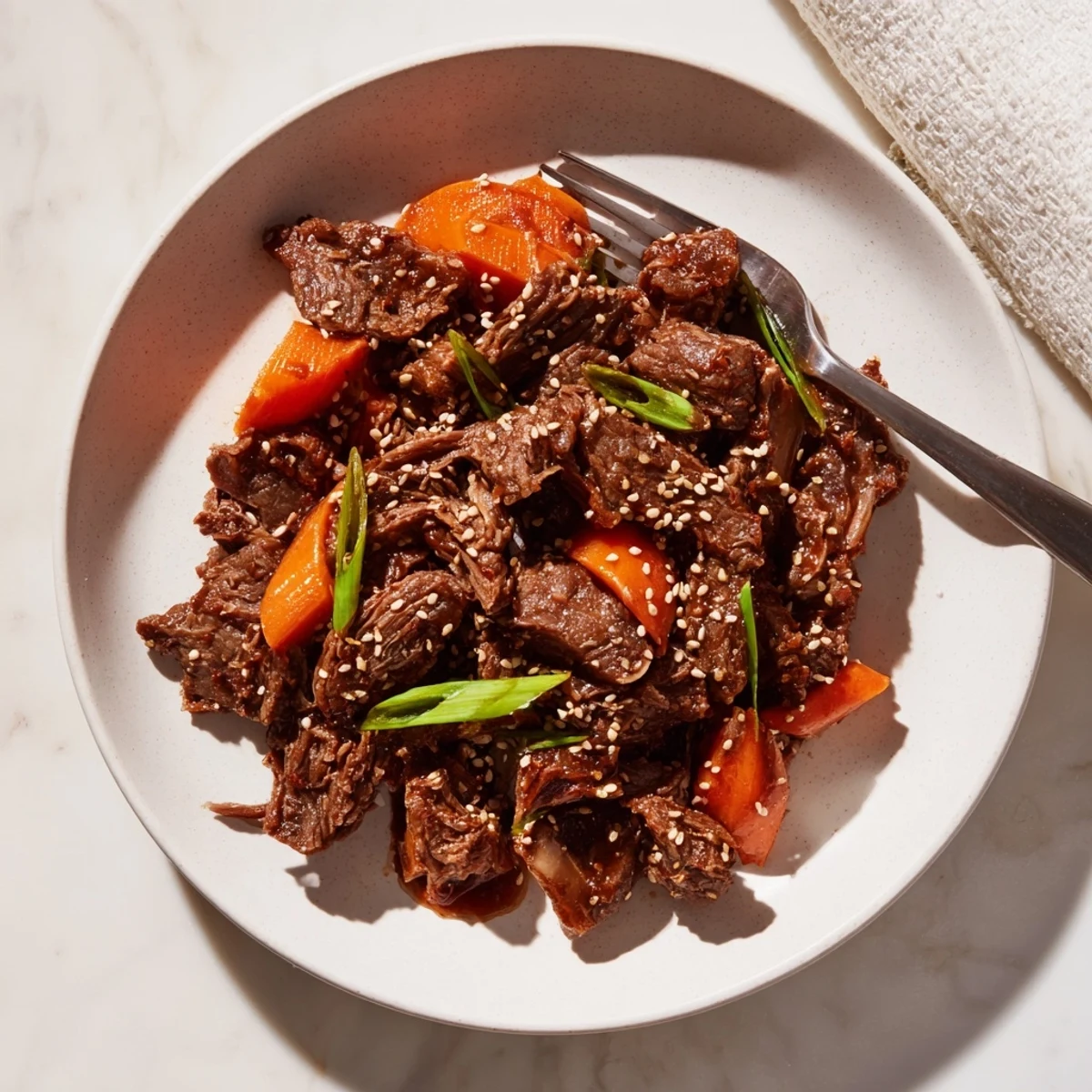
Save When this roast comes out of the oven, the beef should practically fall apart when you touch it with a fork. I like to shred it into big chunks and toss everything back in the reduced sauce for a few minutes before serving.
Making It Your Own
Once I accidentally used maple syrup instead of honey, and it turned out beautifully with a deeper caramel note. Small improvisations like that make recipes feel like yours.
The Sauce Makes It Sing
After removing the meat and vegetables, let the sauce simmer on the stove until it coats the back of a spoon. That extra ten minutes transforms it from good to absolutely incredible.
Perfect Pairings
Steamed jasmine rice soaks up that sauce like nothing else. For a complete Korean-inspired spread, serve alongside some kimchi and quick-pickled cucumbers.
- Make extra rice because everyone will want to mop up every drop of sauce
- The leftovers make incredible tacos or rice bowls the next day
- This roast freezes beautifully if you somehow have leftovers
 Save
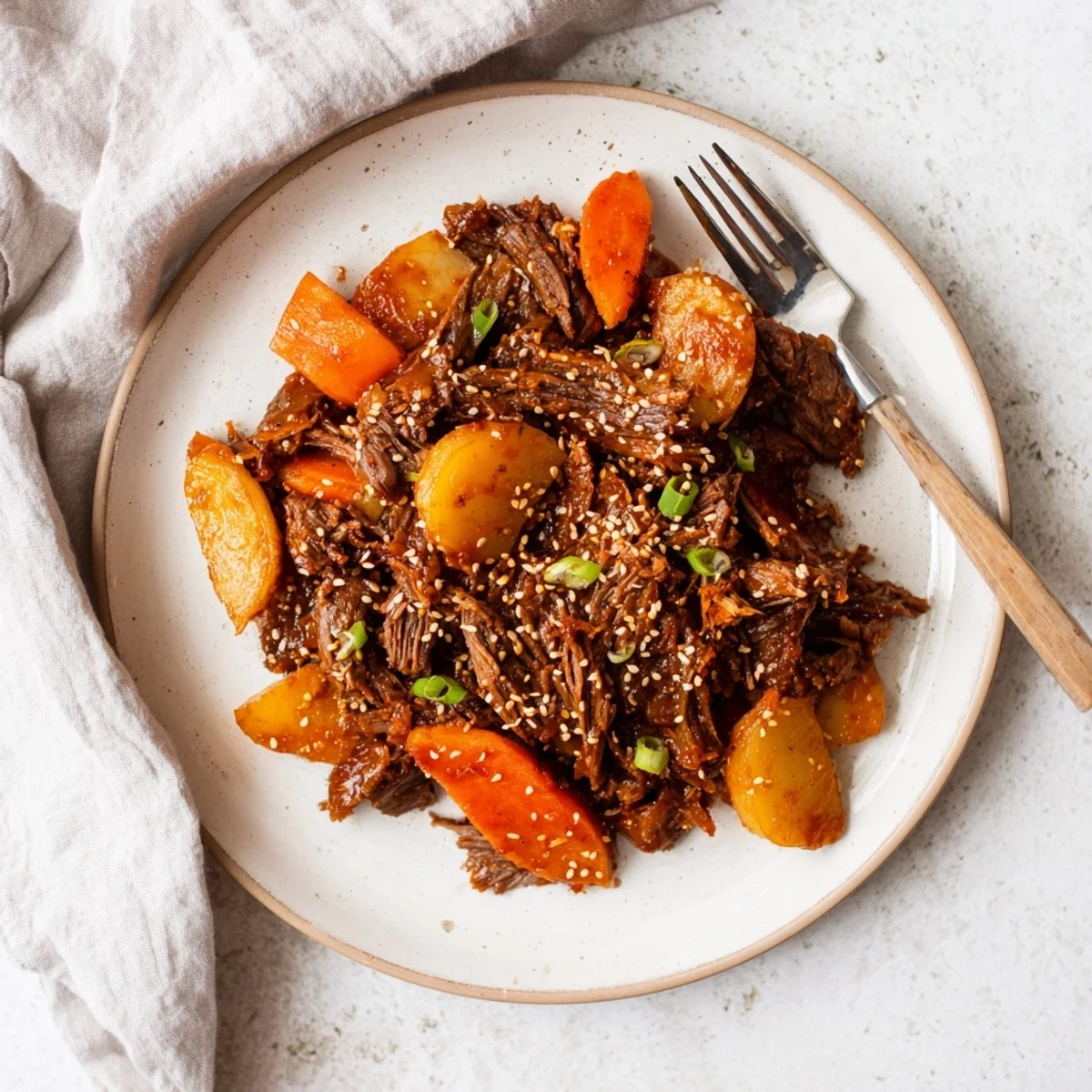
Save There is something deeply satisfying about a dish that tastes like it required complex techniques but actually just needed time and the right ingredients. This pot roast has become one of those recipes I turn to when I want people to feel taken care of.
Recipe FAQs
- → What cut of beef works best for Korean pot roast?
-
Chuck roast is ideal for this dish. Its marbling and connective tissue break down during slow cooking, producing incredibly tender, succulent meat that shreds easily.
- → Can I make this in a slow cooker instead of the oven?
-
Yes. Brown the meat and sauté the onions first, then transfer everything to your slow cooker. Cook on low for 7-8 hours or high for 4-5 hours until tender.
- → Is gochujang very spicy?
-
Gochujang offers moderate heat with complex fermented flavor. The 2 tablespoons used here provides gentle warmth without overwhelming the dish. Adjust to your preference.
- → What can substitute for daikon radish?
-
Turnips, parsnips, or russet potatoes work well. Daikon adds mild sweetness and absorbs the braising liquid beautifully, but these alternatives maintain similar texture.
- → How long will leftovers keep?
-
Store in an airtight container in the refrigerator for up to 4 days. The flavors deepen over time, and the dish reheats beautifully in the microwave or on the stovetop.
- → Can I freeze Korean pot roast?
-
Yes, freeze for up to 3 months. Cool completely, then transfer to freezer-safe containers with sauce. Thaw overnight in the refrigerator before reheating gently.