
 Save
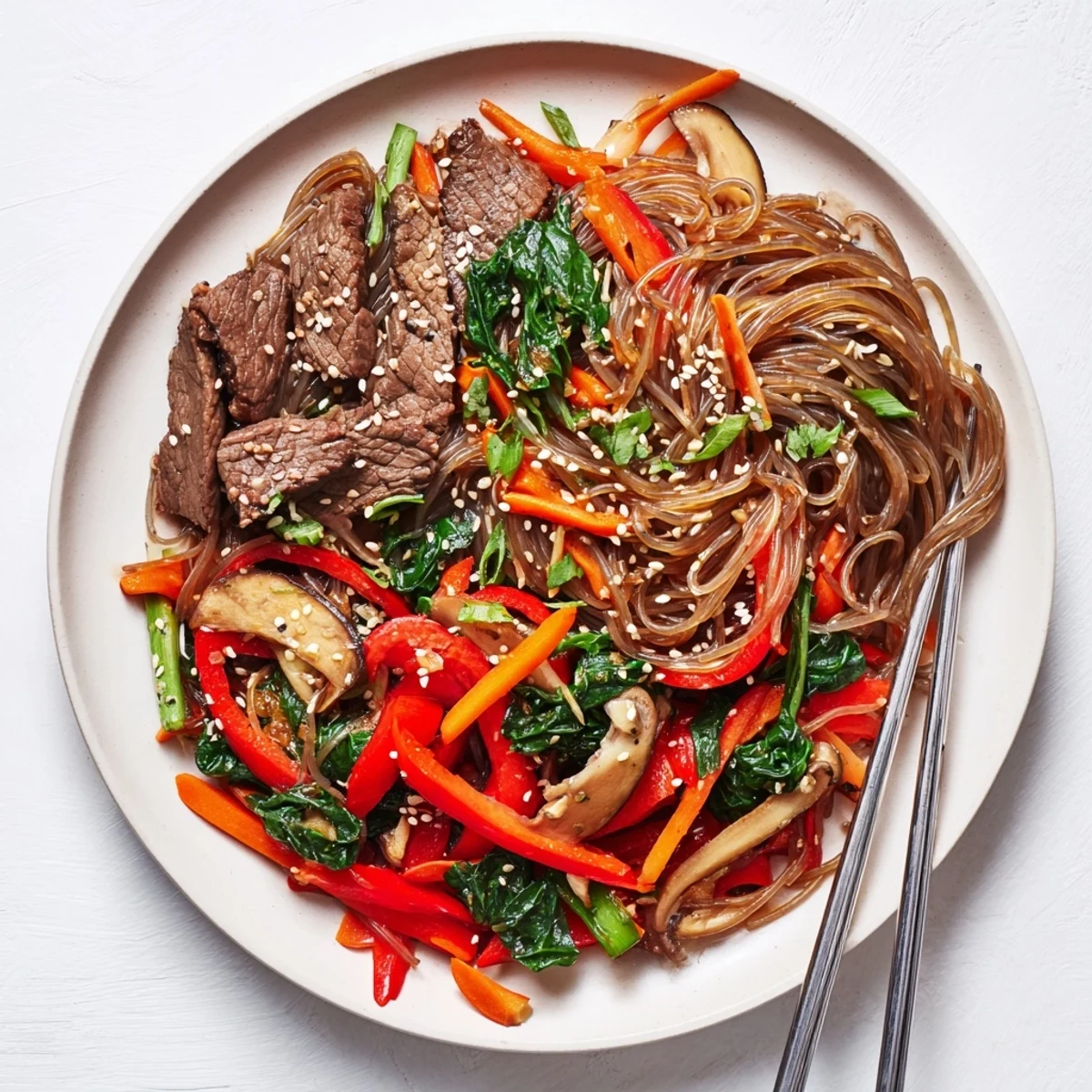
Save Create a satisfying Korean-inspired dish featuring tender marinated beef, sweet potato noodles, and vibrant vegetables. The secret lies in the homemade sauce blending gochujang, soy sauce, brown sugar, and rice vinegar for that perfect balance of sweet, spicy, and savory flavors. Ready in under an hour, this dish offers restaurant-quality results with simple techniques.
The first time I made these Korean beef noodles, my tiny apartment filled with this incredible aroma of sesame and garlic that had my neighbor knocking on my door within ten minutes. We ended up eating standing up around the kitchen counter, and honestly, that impromptu dinner party made this recipe a permanent fixture in my weekly rotation. There is something about the chewy sweet potato noodles and that sauce that just works.
Last winter, when my sister was recovering from surgery and needed comforting food that was not boring, I brought her a container of these noodles. She texted me an hour later saying it was the first thing she had actually wanted to eat in days. Now she asks for them whenever life gets overwhelming.
Ingredients
- Beef sirloin or ribeye: Slice it paper-thin against the grain and it will be tender every single time
- Sweet potato noodles (dangmyeon): These chewy, slightly translucent noodles are what give the dish its authentic texture
- Gochujang: This fermented Korean chili paste brings depth and heat that you cannot replicate with anything else
- Fresh vegetables: The crunch of bell pepper and carrot against the soft noodles makes each bite interesting
Instructions
- Get the beef ready:
- Toss those thin slices with soy sauce, sesame oil, sugar, and minced garlic, then let them hang out for at least 10 minutes while you prep everything else.
- Cook the noodles:
- Boil them until just tender, rinse immediately under cold water to stop the cooking and keep that perfect chewy texture.
- Whisk the sauce:
- Combine soy sauce, brown sugar, gochujang, rice vinegar, sesame oil, water, and grated ginger until the sugar dissolves completely.
- Stir-fry the vegetables:
- Heat your wok until it is hot, sauté the carrots, peppers, and mushrooms until they are just tender, then add spinach and spring onions until they wilt.
- Cook the beef:
- In the same hot wok, toss in the marinated beef and stir-fry quickly for just 2 to 3 minutes until it is browned but still juicy.
- Bring it all together:
- Add the vegetables and noodles back in, pour over that incredible sauce, and toss everything together until it is all coated and heated through.
 Save
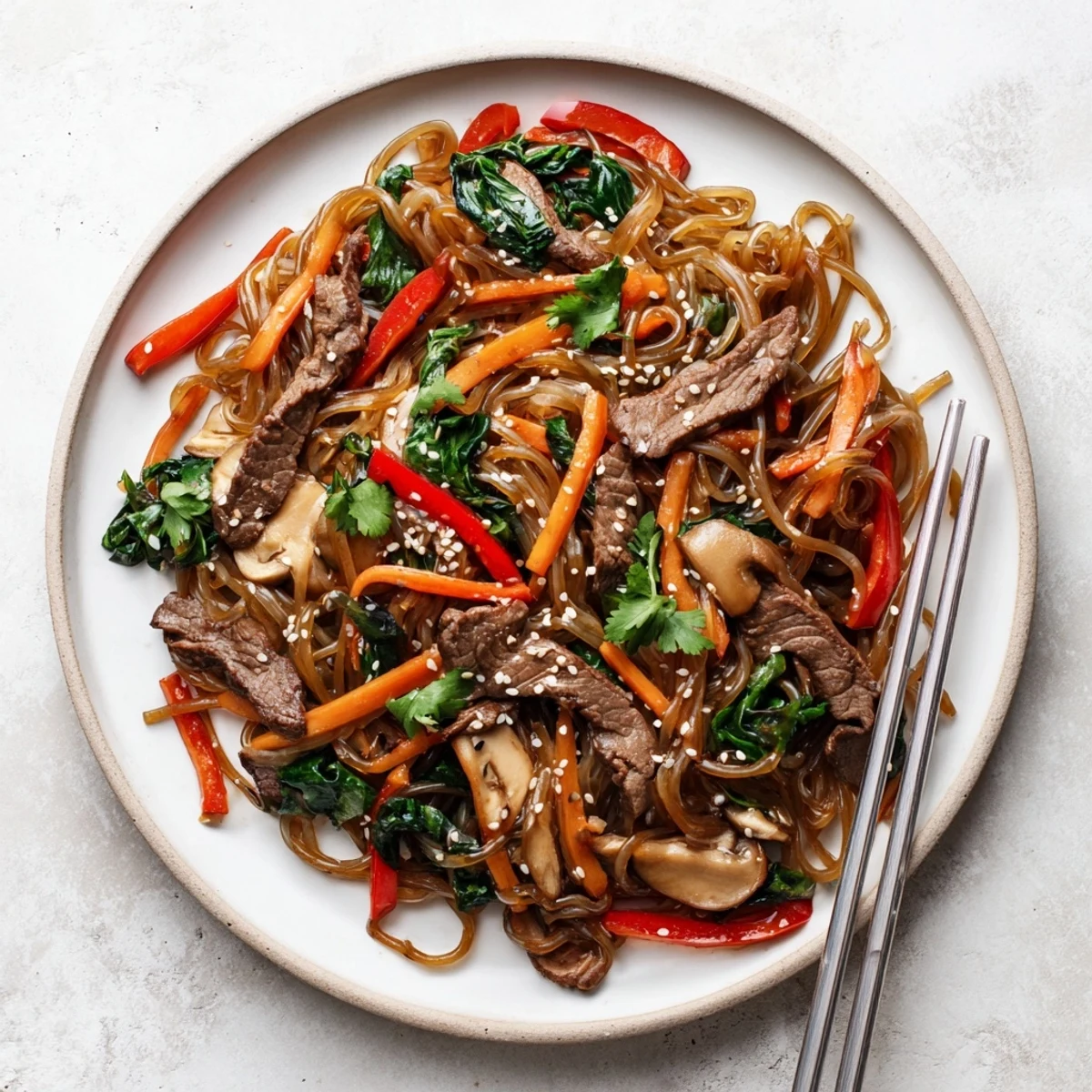
Save My daughter now requests these noodles for her birthday dinner every year, and watching her expertly slurp them up with chopsticks makes me feel like I have passed down something meaningful, even if it is just a really good recipe.
Making It Your Own
Once you have the basic technique down, these noodles are incredibly forgiving. I have made them with whatever vegetables were languishing in my crisper drawer, and they always turn out delicious.
The Noodle Situation
If you cannot find sweet potato noodles at your local Asian market, thick udon noodles work surprisingly well. The texture is slightly different, but the sauce is strong enough to carry any noodle you choose.
Serving Suggestions
A cold light lager or chilled green tea cuts through the richness perfectly. These noodles are also fantastic the next day, packed up for lunch and eaten at room temperature.
- Sprinkle extra sesame seeds right before serving for maximum crunch
- Keep some extra gochujang on the table for the heat lovers
- Never skip the fresh herbs if you have them, they brighten the whole dish
 Save
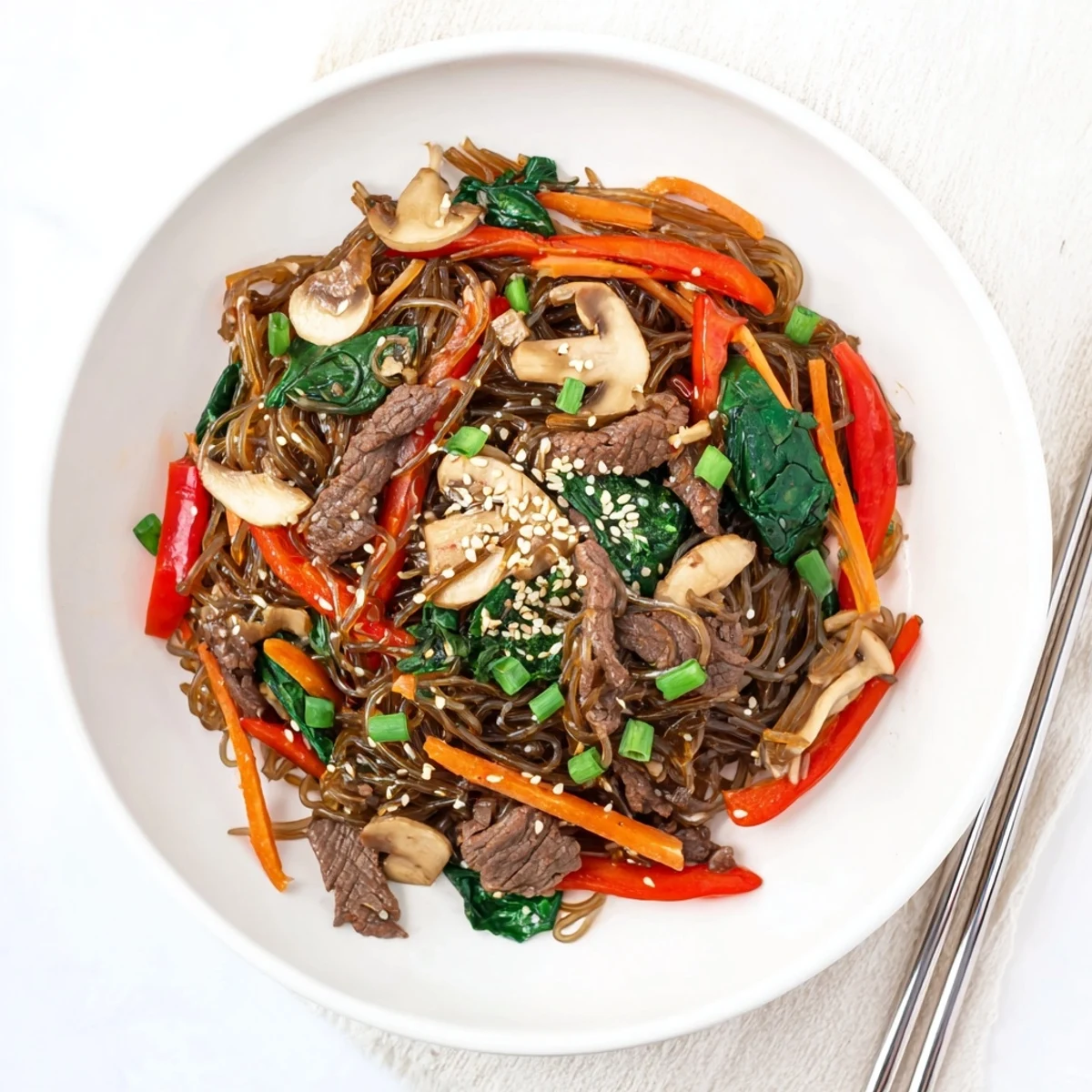
Save There is something deeply satisfying about a bowl of noodles that hits every craving at once, and this recipe delivers exactly that, every single time.
Recipe FAQs
- → What type of noodles work best?
-
Korean sweet potato noodles (dangmyeon) are traditional, offering a delightfully chewy texture. Dried udon noodles make an excellent substitute with similar thickness and bite.
- → Can I make this dish spicy?
-
Adjust the gochujang amount to increase heat levels. For extra spice, add Korean chili flakes or fresh sliced chilies during the vegetable stir-fry stage.
- → How do I slice beef thinly?
-
Partially freeze the beef for 30 minutes before slicing. This firms the meat, making it easier to cut thin, even strips against the grain.
- → Can I prepare components ahead?
-
Marinate beef and prepare sauce up to 24 hours in advance. Cook noodles and chop vegetables earlier in the day, then stir-fry everything just before serving.
- → What vegetables can I add?
-
Zucchini, broccoli, snap peas, or bean sprouts work beautifully. Consider adding bok choy for extra crunch and Asian flair.
- → Is this dish gluten-free?
-
Traditional ingredients contain gluten. Substitute regular soy sauce with tamari and use gluten-free noodles to make this dish completely gluten-free.